Within IFOs
Why Better UFO Data Matters
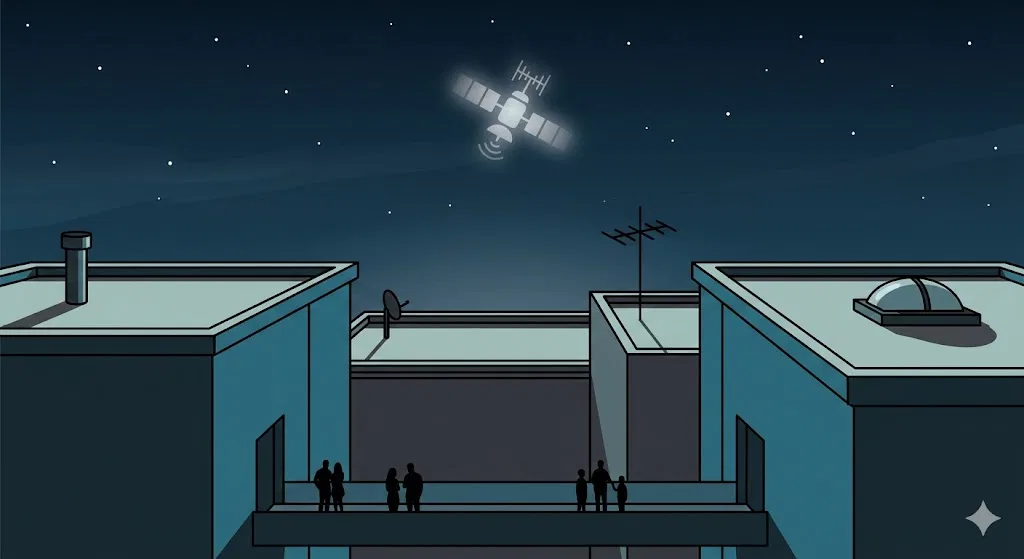
NASA's UAP study frames the problem as evidence quality: better sensors, metadata and reporting are needed before firm claims can be made.
On this page
- Sparse report problems
- Data acquisition priorities
- Scientific caution
Page outline Jump by section
Introduction
NASA’s 2023 UAP study is important to the IFO question because it reframes many UFO reports as a data-quality problem before they become a mystery problem. The study did not claim to solve famous cases or endorse exotic explanations. Instead, it argued that most existing UAP material is too sparse, inconsistent or poorly documented to support firm scientific conclusions, and that better sensors, calibration, metadata and reporting systems are needed before unusual reports can be separated reliably from aircraft, balloons, drones, satellites, sensor artefacts and atmospheric effects. [NASA Science]science.nasa.govNASA Science…
That matters for identified flying objects because many IFOs are not identified by intuition alone. They are identified because investigators can compare a report with flight tracks, wind, satellite passes, sensor settings, camera geometry, weather and time-stamped location data. NASA’s central point was cautious but practical: if the evidence is weak, the honest answer is often not “alien” or “nothing happened”, but “we do not yet have the data needed to know”. [NASA Science]science.nasa.govNASA Science…
Why NASA treated UAP as a data problem
NASA announced its independent UAP study in 2022 with a limited purpose: identify what data existed, how future data should be collected, and how the agency’s scientific tools could help move the subject forward. The final report stressed that the study was not a re-investigation of historic incidents. Its task was closer to building a roadmap for future evidence than adjudicating old stories. [NASA Science]science.nasa.govNASA Science…
This distinction is easy to miss. A dramatic video can look persuasive to a viewer while still being scientifically weak. Without range, camera angle, precise time, sensor mode, calibration, weather and independent corroboration, an object’s apparent speed, size or behaviour may be badly misread. NASA’s report noted that UAP data often come from instruments not designed to detect the objects being reported, which makes calibration and metadata especially important. [NASA Science]science.nasa.govNASA Science…
For IFO analysis, this is not a bureaucratic detail. It is the difference between “a bright moving object” and “a balloon drifting with the wind at a known altitude”, or between “a fast object on infrared video” and “a distant object whose apparent motion is affected by camera movement and parallax”. A sighting can remain unidentified not because it is extraordinary, but because the information needed to test ordinary causes was never captured.
NASA’s report also stated that the majority of UAP observations can be attributed to known human-made or natural phenomena, while a smaller number remain unresolved. That framing keeps the door open to genuine unknowns without treating every unresolved report as evidence of something exotic. [NASA Science]science.nasa.govNASA Science…
Sparse reports create false mysteries
The most useful part of NASA’s study for ordinary UFO reports is its explanation of what is missing from many cases. The report identified recurring weaknesses: poor sensor calibration, lack of multiple measurements, missing sensor metadata and inadequate baseline data. These are not minor technical complaints. They are the exact gaps that make IFO identification harder. [NASA Science]science.nasa.govNASA Science…
A sparse report may contain a sincere witness statement and even an image, yet still lack the facts needed to rule out common causes. Useful UAP data would ideally include:
- the precise time and location of the observation;
- the observer’s direction of view and elevation angle;
- the sensor or camera type, settings, field of view and observing mode;
- weather, visibility, wind and cloud information;
- nearby aircraft, drone, balloon, satellite and launch activity;
- multiple independent observations from different positions;
- enough duration and context to estimate distance, speed and trajectory.
NASA’s point was that metadata turns a sighting into an analysable event. Metadata means the information around the observation: when it happened, where it happened, how it was recorded, what the sensor was doing and what the surrounding conditions were. Without it, an image or radar return may be intriguing but scientifically underpowered. [NASA Science]science.nasa.govNASA Science…
This is why many UFO reports fall into a frustrating middle ground. They cannot be confidently explained, but they also cannot support a strong claim. In IFO terms, the missing information prevents ordinary identifications from being tested. A balloon, bird, aircraft light, satellite, drone or reflection may be the best explanation, but the case can remain formally unresolved because the original report did not preserve the data needed to prove it.
Better sensors are not enough without calibration
NASA did not simply call for more cameras. It called for more reliable observations. Calibration is the process that tells analysts how a sensor behaves, what errors it introduces and how its readings should be interpreted. The report emphasised that apparent UAP have sometimes been shown to be sensor artefacts once proper calibration and metadata were applied. [NASA Science]science.nasa.govNASA Science…
That point is central to UFO misidentification. A sensor artefact can be a real recorded feature without being a real object in the sky. A camera can create glare, blooming, compression effects, lens reflections or tracking artefacts. Radar and infrared systems can also produce returns or displays that are easy to overinterpret when their limitations are not understood. Better standards help investigators distinguish a physical object from the way an instrument represents light, heat, motion or noise.
NASA’s study also argued for multiple, well-calibrated sensors. One sensor can mislead; two or more independent sensors, especially from different viewpoints or modalities, can constrain what is actually happening. If a report has video, radar, weather data and independent visual observations, analysts can test whether the reported object moved like a balloon, aircraft, satellite or bird. If it has only a short clip without range or sensor settings, the case is far weaker.
This is where the NASA approach is most useful for the wider public debate. It does not require dismissing witnesses. It requires separating a witness’s perception from the physical claim being made. Someone may accurately report seeing something strange while the available data still fail to establish distance, speed, size or origin.
Baseline data makes ordinary causes visible
One of NASA’s more important recommendations was the need for baseline data: a record of what normal looks like in a given observing environment. The report noted that anomaly detection is difficult if analysts do not first understand the ordinary background. AARO had already begun studying what normal phenomena such as solar glint or balloons look like to military sensors, and NASA described that as an essential step before searching for the abnormal. [NASA Science]science.nasa.govNASA Science…
This is directly relevant to IFOs. A case may look unusual because the observer has never seen that ordinary thing from that angle, in that weather or through that sensor. Baseline libraries can show how common objects behave under confusing conditions: balloons drifting with wind, birds crossing infrared imagery, drones moving at low altitude, aircraft lights seen head-on, satellites flaring, Starlink trains crossing twilight skies, or reflections appearing to move with camera motion.
AARO’s public material shows how this plays out in practice. Its official imagery page includes cases assessed with high confidence as balloons, including consumer-grade reflective foil balloons, based on shape, behaviour and correlation with wind speed and direction. [AARO]aaro.milOpen source on aaro.mil. The 2024 ODNI and Department of Defence UAP report likewise said AARO resolved cases as prosaic objects including balloons, birds and uncrewed aircraft systems. [Director of National Intelligence]dni.gov4020 uap 20244020 uap 2024
The scientific value is not just in closing individual cases. A well-built baseline helps investigators avoid treating ordinary clutter as anomalous. It also allows stronger cases to stand out more clearly, because they can be compared against a known library of conventional explanations rather than against vague impressions.
NASA’s practical data priorities
NASA’s report suggested several data-acquisition paths, but the common theme was standardisation. The agency’s proposed role was not to become a UFO hotline in the popular sense. It was to bring expertise in data curation, calibration, machine learning, open science and long-term scientific missions into a wider government effort. [NASA Science]science.nasa.govNASA Science…
The priorities were practical rather than sensational.
Standardised reporting. NASA noted that there was no standard federal system for civilian UAP reporting and that existing civilian channels were inadequate for drawing scientific conclusions. A standard report would need more than a narrative; it would need time, location, direction, sensor information and environmental context. [NASA Science]science.nasa.govNASA Science…
Crowdsourced observations. The report recommended exploring open-source smartphone-based systems that could collect images and sensor metadata from multiple observers. The value would not be a flood of blurry phone videos by themselves, but the possibility of synchronised, location-stamped and sensor-aware observations from many people. [NASA Science]science.nasa.govNASA Science…
Earth-observing and environmental data. NASA recognised that its current Earth-observing satellites are not usually designed to image small UAP events directly. Still, satellite data can help establish environmental conditions around reported events, and future systems may provide more useful contextual data. [NASA Science]science.nasa.govNASA Science…
Civilian airspace repositories. The report argued that NASA is well placed to advise on repositories of civilian airspace data, while also warning that air traffic and radar systems are not always optimised for rigorous scientific UAP analysis. That caution is important: existing data can help, but it should not be treated as automatically definitive. [NASA Science]science.nasa.govNASA Science…
Machine learning with better inputs. NASA saw a role for artificial intelligence and machine learning, but only after better data exist. The report stated that UAP analysis is more limited by data quality than by the availability of analysis techniques. In other words, an algorithm cannot rescue a case if the original observation lacks calibration, metadata and context. [NASA Science]science.nasa.govNASA Science…
Why reporting stigma affects the evidence
NASA also treated stigma as a data-loss problem. If pilots, sensor operators or civilians avoid reporting unusual observations because they fear ridicule or career consequences, then the available record becomes selective and incomplete. The final report argued that NASA’s public trust and scientific culture could help destigmatise reporting while still encouraging scepticism and critical analysis. [NASA Science]science.nasa.govNASA Science…
This is a delicate balance. Reducing stigma does not mean accepting unlikely explanations uncritically. It means making it easier for trained observers to report unusual events in a structured way, so that analysts can determine whether the cause was mundane, hazardous, anomalous or simply unknowable from the data. NASA officials also said the agency would work with the public and commercial pilots to collect broader data and contribute to a more reliable future UAP dataset. [Rev]rev.comOpen source on rev.com.
For the IFO field, stigma can distort both sides of the evidence. Under-reporting can hide useful observations, including possible aviation-safety issues. Over-sensational reporting can flood the system with poorly documented claims. A good reporting standard avoids both extremes by making the report useful whether the final answer is a balloon, drone, aircraft, sensor artefact, weather phenomenon or genuinely unresolved event.
Scientific caution is the main takeaway
The NASA study’s most important contribution was not a new list of strange cases. It was a governance model for handling uncertainty. The agency argued for a rigorous, evidence-based framework, better acquisition methods, systematic reporting and transparent analysis. That approach is slower than speculation, but it is also more useful. [Wikisource]en.wikisource.orgResponses to Statement of TaskResponses to Statement of Task
Scientific caution changes how UFO reports should be read. An unresolved case is not automatically a strong case. Sometimes it is unresolved because the available evidence is poor. A short video without range, a pilot report without independent sensor confirmation, or a radar return without calibration details may all be worth preserving, but they do not carry the same weight as a multi-sensor, time-stamped, well-documented event.
The caution also cuts the other way. Better data standards do not assume that every report is trivial. They create the conditions for finding out. If an object truly showed behaviour outside known aircraft, drone, balloon, bird or atmospheric patterns, high-quality data would make that more visible, not less. The same process that identifies IFOs also protects genuinely unusual cases from being buried in noise.
NASA’s UAP study therefore belongs squarely inside the causes of UFO reports. It explains why so many reports remain ambiguous, why many can later become IFOs, and why future progress depends less on dramatic testimony than on ordinary scientific discipline: calibrated instruments, complete metadata, multiple observations, baseline libraries, open reporting and a willingness to say “not enough data” when that is the most honest conclusion.

Amazon book picks
Further Reading
Books and field guides related to Why Better UFO Data Matters. Use these as the next step if you want deeper reading beyond the article.
Extraterrestrial
Examines how unusual observations should be investigated scientifically.
eBay marketplace picks
Marketplace Samples
Example marketplace items related to this page. Use the search link to explore similar finds on eBay.


Endnotes
-
Source: science.nasa.gov
Link: https://science.nasa.gov/wp-content/uploads/2023/09/uap-independent-study-team-final-report.pdfSource snippet
NASA Science...
-
Source: nasa.gov
Title: update nasa shares uap independent study report names director
Link: https://www.nasa.gov/news-release/update-nasa-shares-uap-independent-study-report-names-director/Source snippet
NASAUPDATE: NASA Shares UAP Independent Study Report14 Sept 2023 — We found that NASA can help the whole-of-government UAP effort through...
-
Source: science.nasa.gov
Link: https://science.nasa.gov/uap/Source snippet
NASA ScienceUAPJune 16, 2022 — 9 Jun 2022 — The study will focus on identifying available data, how best to collect future data, and how...
Published: June 16, 2022
-
Source: en.wikisource.org
Title: Responses to Statement of Task
Link: https://en.wikisource.org/wiki/NASA_Unidentified_Anomalous_Phenomena%3A_Independent_Study_Team_Report/Responses_to_Statement_of_Task -
Source: aaro.mil
Link: https://www.aaro.mil/UAP-Cases/Official-UAP-Imagery/ -
Source: earthdata.nasa.gov
Link: https://www.earthdata.nasa.gov/data/projects/machine-learning-project -
Source: en.wikisource.org
Title: Page:UAP Independent Study Team
Link: [https://en.wikisource.org/wiki/Page%3AUAP_Independent_Study_Team_-Final_Report.pdf/29](https://en.wikisource.org/wiki/Page%3AUAP_Independent_Study_Team-_Final_Report.pdf/29) -
Source: rev.com
Link: https://www.rev.com/transcripts/unidentified-anomalous-phenomena-independent-study-report-from-nasa-transcript -
Source: en.wikisource.org
Title: Page:UAP Independent Study Team
Link: [https://en.wikisource.org/wiki/Page%3AUAP_Independent_Study_Team_-Final_Report.pdf/5](https://en.wikisource.org/wiki/Page%3AUAP_Independent_Study_Team-_Final_Report.pdf/5) -
Source: science.nasa.gov
Link: https://science.nasa.gov/uap/faqs/ -
Source: aaro.mil
Link: https://www.aaro.mil/ -
Source: aaro.mil
Title: UNCLASSIFIED FY23 Consolidated Annual Report on UAP Oct 25 2023 1236
Link: https://www.aaro.mil/Portals/136/PDFs/UNCLASSIFIED-FY23_Consolidated_Annual_Report_on_UAP-Oct_25_2023_1236.pdf -
Source: en.wikisource.org
Title: Index:AARO Historical Record Report Volume 1 2024
Link: https://en.wikisource.org/wiki/Index%3AAARO_Historical_Record_Report_Volume_1_2024.pdf -
Source: rev.com
Title: nasa holds first public meeting on ufos transcript
Link: https://www.rev.com/transcripts/nasa-holds-first-public-meeting-on-ufos-transcript -
Source: dni.gov
Title: 4020 uap 2024
Link: https://www.dni.gov/index.php/newsroom/reports-publications/reports-publications-2024/4020-uap-2024
Additional References
-
Source: thedebrief.org
Title: nasas unidentified anomalous phenomena report key takeaways
Link: https://thedebrief.org/nasas-unidentified-anomalous-phenomena-report-key-takeaways/Source snippet
The DebriefNASA's Unidentified Anomalous Phenomena Report14 Sept 2023 — “At present, analysis of UAP data is hampered by poor sensor cali...
-
Source: youtube.com
Title: NASA UFO Press Conference
Link: http://www.youtube.com/watch?v=p4FiB0zHl4ASource snippet
NASA UAP independent study team report press conference NASA UAP Independent Study Report — Press Conference (September 14, 2023) Lies Above...
Published: September 14, 2023
-
Source: youtube.com
Title: Public Meeting on Unidentified Anomalous Phenomena (Official NASA Broadcast)
Link: http://www.youtube.com/watch?v=bQo08JRY0iMSource snippet
NASA UFO Panel | NASA's UFO Study Team Reveals Its Finding...
-
Source: youtube.com
Title: NASA UFO Panel | NASA’s UFO Study Team Reveals Its Finding
Link: http://www.youtube.com/watch?v=0CaHx6tTsKYSource snippet
NASA UAP Independent Study Report — Press Conference (September 14, 2023)...
Published: September 14, 2023
-
Source: youtube.com
Title: NASA news conference on UFO report
Link: http://www.youtube.com/watch?v=PzHKxHnN7d0Source snippet
Public Meeting on Unidentified Anomalous Phenomena (Official NASA Broadcast)...
-
Source: aiaa.org
Link: https://aiaa.org/wp-content/uploads/2025/08/AIAA-UAPIOC-Opinion-Paper-UAP-Occupational-Safety-Reporting_ForPublication_kb.pdf -
Source: facebook.com
Link: https://www.facebook.com/SkyNewsAustralia/posts/an-astronomy-professor-has-revealed-that-artificial-intelligence-could-help-expe/702278411929760/ -
Source: facebook.com
Link: https://www.facebook.com/AstroAlexandraOfficial/posts/nasa-uap-ufo-report-released-today-offers-a-few-answers-but-doesnt-find-or-rule-/319484690604324/ -
Source: zhihu.com
Link: https://www.zhihu.com/en/answer/3211845828 -
Source: facebook.com
Link: https://www.facebook.com/Reuters/posts/nasa-on-thursday-said-it-has-named-a-new-director-of-research-into-what-the-gove/788839076440160/
Topic Tree
Follow this branch
Parent topic
IFOsRelated pages 39
- A Head On Aircraft Can Look Like A Stationary Light Because It The Stationary Light That Is Moving
- AARO What Modern UAP Reviews Resolve
- Aircraft Lights Why Ordinary Aircraft Look So Strange
- Atmosphere When Weather Makes Shapes in the Sky
- Balloons Why Balloons Become Flying Saucers
- +34 more in sidebar